
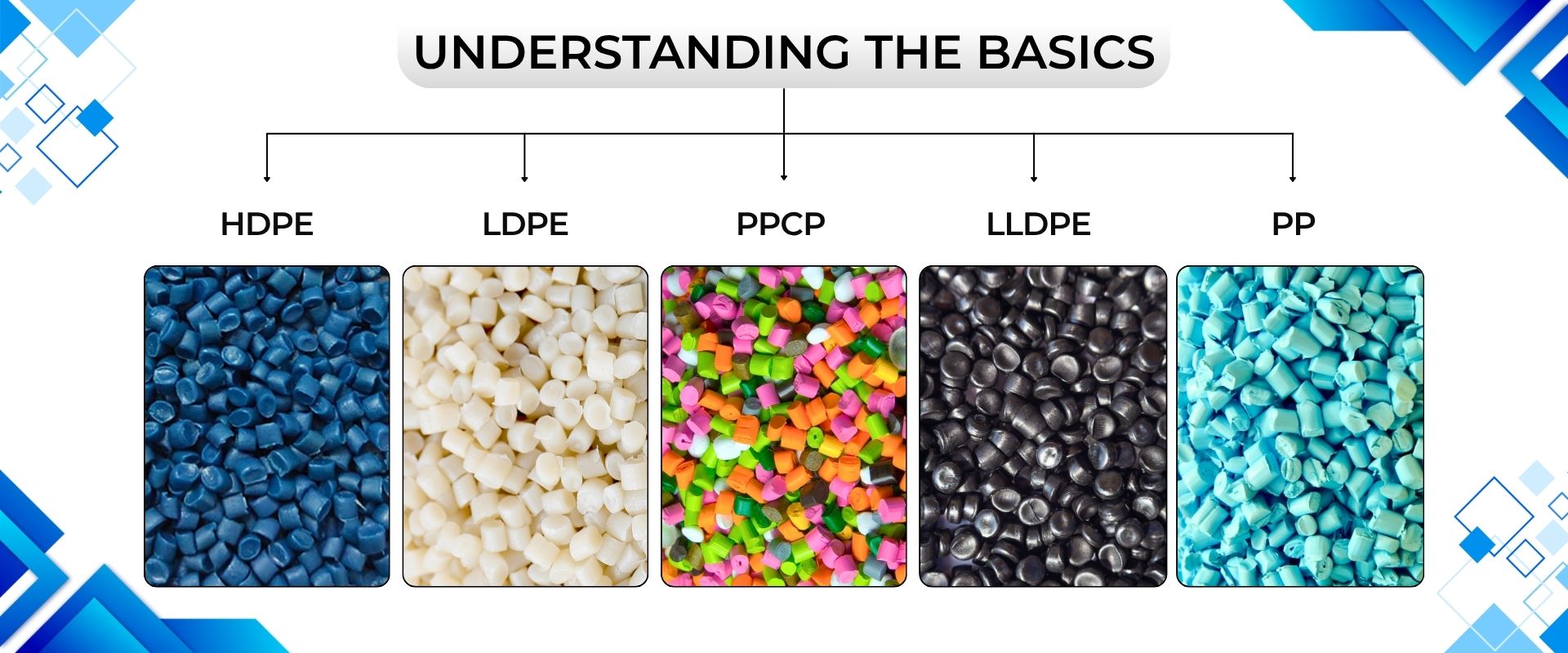
Understanding the Basics: HDPE, LDPE, LLDPE, and PP Explained
The modern manufacturing ecosystem runs on polymers — and at its foundation lie four materials that define product performance across industries: HDPE, LDPE, LLDPE, and PP. Together, these polymer granules power the global supply chain of packaging, automotive, construction, and consumer goods. Each one behaves differently under stress, temperature, and processing, and understanding those differences is essential for operational precision and cost efficiency.
HDPE: Strength and Structural Integrity
High-Density Polyethylene (HDPE) is synonymous with strength, durability, and consistency. Its tightly packed molecular structure results in high tensile strength, chemical resistance, and excellent rigidity. HDPE is used in pipes, industrial containers, and films that demand reliability under pressure. For manufacturers, it reduces production interruptions and rejects — making it the material of choice where mechanical performance defines profitability.
LDPE: Flexibility and Process Efficiency
Low-Density Polyethylene (LDPE) represents flexibility and adaptability. With its softer molecular composition, LDPE delivers transparency, elasticity, and easy processability. Industries rely on LDPE for films, laminates, squeeze bottles, and coatings that require uniform sealing and smooth finishing. Its lightweight structure allows faster production cycles, making it a preferred material in the competitive flexible-packaging segment.
LLDPE: Balanced Performance for Modern Packaging
Linear Low-Density Polyethylene (LLDPE) merges flexibility with toughness. Engineered through controlled copolymerization, it offers superior impact resistance and puncture strength — vital for stretch films, liners, and wraps. LLDPE performs well under extreme load and low temperatures, allowing manufacturers to extend packaging life while optimizing material usage. Its ability to bridge performance and efficiency explains why LLDPE continues to grow in global demand.
PP: The Versatile Industrial Workhorse
Polypropylene (PP) stands out for its combination of rigidity, heat resistance, and chemical stability. It is used in automotive parts, homeware, textiles, and injection-molded components. PP’s unique “living hinge” property enables repeated bending without fatigue — a feature rare in polymers. Beyond functionality, PP’s recyclability and cost-to-performance balance make it central to sustainable manufacturing strategies worldwide.
Choosing the Right Polymer
Selecting between HDPE, LDPE, LLDPE, and PP is not a matter of preference — it is a question of strategy. HDPE delivers strength, LDPE offers flexibility, LLDPE provides resilience, and PP ensures versatility. Each polymer contributes a distinct advantage to a product’s life cycle, influencing not only physical properties but also operating costs, energy consumption, and market competitiveness.
The difference between a 30-rupee and a 40-rupee polymer grade is not merely price — it’s consistency, performance, and trust. Manufacturers choosing the right grade reduce waste, minimize downtime, and maintain predictable quality standards across production lines.
The Strategic Edge: Quality, Reliability, and Scale
In today’s market, polymer granules are more than raw materials; they are performance enablers. Suppliers must deliver consistent quality, certified testing, and on-time delivery at scale. With global buyers demanding traceability and transparency, polymer trading is shifting from volume-driven transactions to partnership-based sourcing. The ability to guarantee reliable performance across every batch now defines long-term credibility in this industry.
Nidhi Enterprises: Delivering Precision in Polymers
Nidhi Enterprises, based in New Delhi, operates at this intersection of quality and reliability. The company specializes in the trading and export of high-grade HDPE, LDPE, LLDPE, PP, PPCP, PVC, and Masterbatches. Each consignment is backed by technical verification, material testing, and logistics precision, ensuring that every kilogram aligns with international specifications. The organization’s philosophy centers on consistent supply, transparent pricing, and continuous improvement — the essentials for global competitiveness in polymer manufacturing.
Understanding these polymers is no longer optional for industry leaders. It is a foundation for better engineering decisions, leaner operations, and sustainable growth. As global manufacturing continues to evolve, those who master the nuances of HDPE, LDPE, LLDPE, and PP will set the benchmark for efficiency, quality, and innovation.