
How Polymer Pricing Works: Import, Demand & Crude Oil Impact
Introduction
How polymer pricing works is one of the most important concepts for any business dealing with plastic raw materials. Whether you are sourcing HDPE, PP, or LLDPE, understanding how polymer pricing works helps you make better purchasing decisions and avoid unnecessary cost fluctuations.
At Nidhi Enterprises, we analyze global trends daily to help clients understand how polymer pricing works across crude oil movements, demand cycles, and import dynamics.
If you’re still unsure which material fits your requirement, you should first read our detailed guide on HDPE vs PP vs LLDPE: Which Polymer Should You Use before diving into pricing.
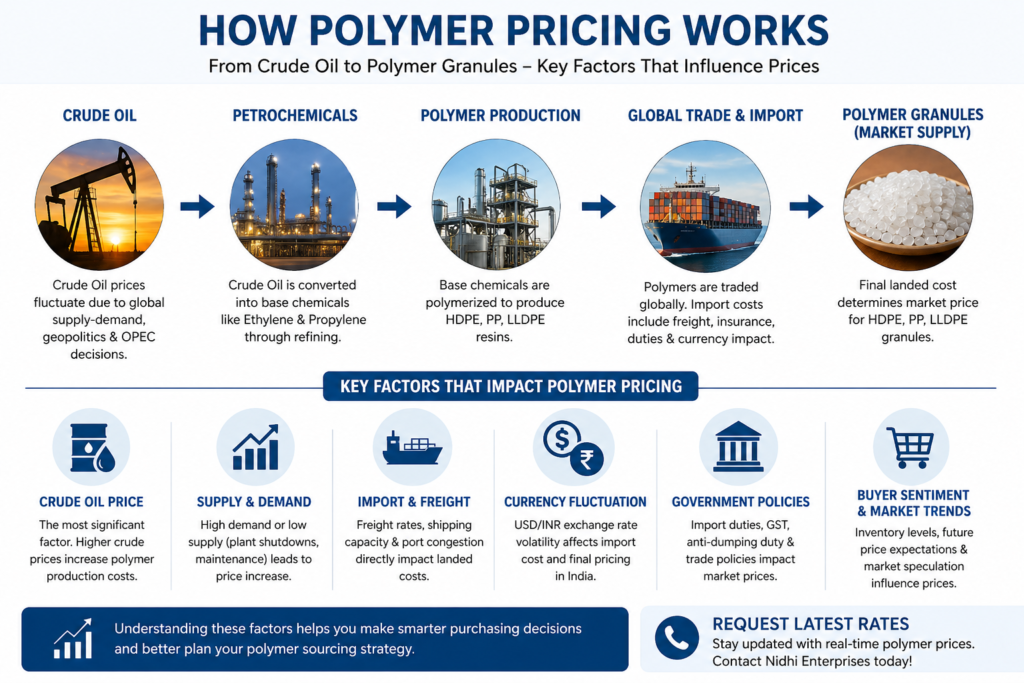
1. How Polymer Pricing Works: Crude Oil Impact: The Foundation of Polymer Prices
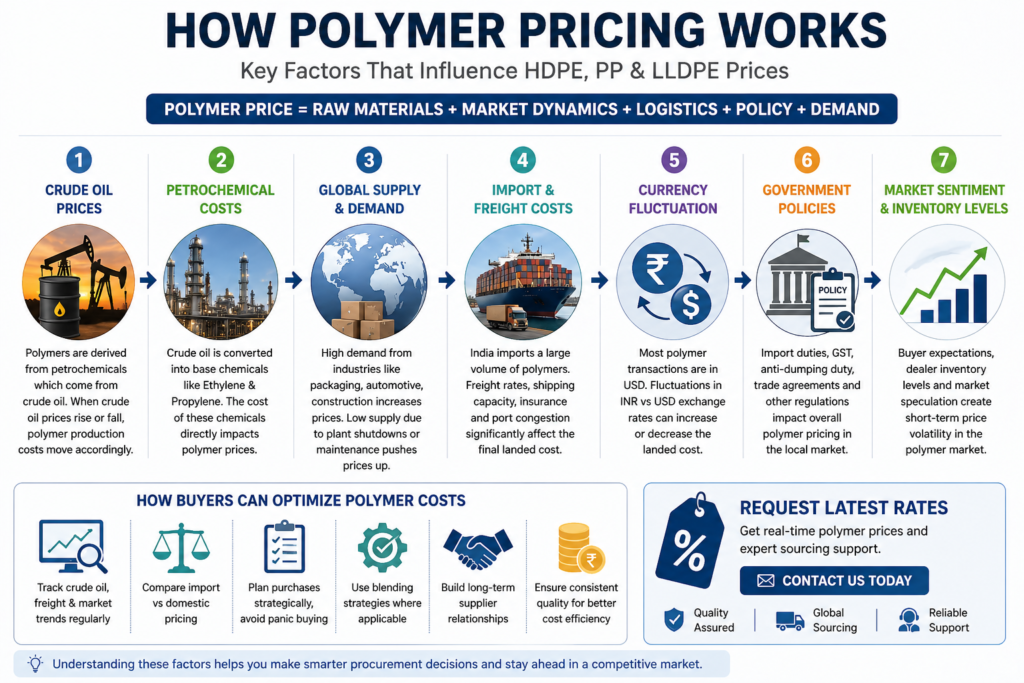
Polymers like HDPE, PP, and LLDPE are derived from petrochemicals. Their base raw materials—ethylene and propylene—come directly from crude oil and natural gas processing.
You can track global crude price movements here:
👉 Brent Crude Oil Price Index
When crude oil prices rise, the cost of producing these base chemicals increases. As a result, polymer prices move upward. Conversely, when crude prices fall, polymer prices may soften.
However, this relationship is not always immediate. There is usually a lag because producers adjust pricing based on contracts, inventory, and global supply conditions.
2. How Polymer Pricing Works in Demand & Supply Cycles
Polymer pricing is heavily influenced by global demand cycles. Industries such as packaging, automotive, construction, and infrastructure consume large volumes of polymers.
For example, materials like polypropylene dominate automotive and packaging applications. If you want deeper insights, read:
👉 Where Polypropylene (PP) is Used Across Industries
When demand increases, prices rise. When demand slows, prices stabilize or decline. Additionally, plant shutdowns or export restrictions can tighten supply and push prices upward.
3. How Polymer Pricing Works in Import Markets (CIF, Freight & Currency)
India is a significant importer of polymers, especially from regions like the Middle East and Southeast Asia. This makes import pricing a key factor in overall cost.
When you import polymers, the final landed price depends on:
- Base material cost (FOB)
- Freight charges
- Insurance
- Currency exchange rates
To understand freight volatility trends, you can monitor:
👉 Global Container Freight Index
Even if global polymer prices remain stable, fluctuations in freight or INR/USD exchange rates can significantly impact landed cost.
4. How Polymer Pricing Works in India vs Global Markets
The Indian polymer market behaves differently compared to global markets. Domestic pricing is influenced by:
- Producer pricing (Reliance, Haldia, etc.)
- Distributor inventory levels
- SME and OEM demand
Choosing the right supplier becomes critical here. If you are evaluating vendors, read:
👉 How to Choose the Right Polymer Supplier for Your Business
At times, Indian prices may remain stable even when global prices fluctuate—making local market tracking essential.
5. How Polymer Pricing Works for Virgin vs Reprocessed Materials
Not all polymers are priced equally. Material category plays a major role:
- Virgin polymers → High quality, higher cost
- Off-grade → Slight variation, lower cost
- Reprocessed → Most economical
If you want a complete breakdown, refer to:
👉 Difference Between Virgin, Reprocessed & Off-Grade Polymers
In many applications, blending strategies (like 80:20) can reduce costs significantly without compromising performance.
6. Market Psychology & Buyer Behavior
Polymer pricing is also influenced by buyer sentiment.
When buyers expect price increases, they start stocking heavily, which artificially raises demand and pushes prices higher. Conversely, during expected downturns, delayed purchasing reduces demand.
This cycle creates short-term volatility independent of actual supply-demand fundamentals.
7. How OEM Buyers Can Optimize Polymer Costs
For OEM-focused businesses, cost control is about structured sourcing—not just low pricing.
At Nidhi Enterprises, we recommend:
- Tracking crude oil and freight trends weekly
- Comparing import vs domestic pricing
- Using blending strategies where applicable
- Avoiding panic buying
- Building long-term supplier relationships
This approach ensures consistent supply, stable pricing, and better margins.
Conclusion
Polymer pricing is driven by crude oil, demand cycles, import logistics, and market psychology. Businesses that understand these factors make smarter procurement decisions and gain a competitive edge.